The Essentials Studio Equipment
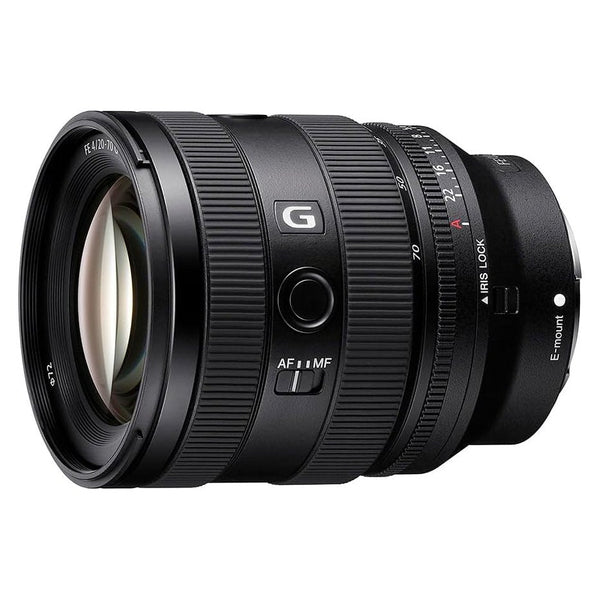
Sony FE PZ 16-35mm f/4 G Lens
Sony announced this lens in March 2022 as the lightest constant-f/4 wide zoom made for full frame. That is the headline. The real story is the power zoom.

What it is
The Sony FE PZ 16-35mm f/4 G — model SELP1635G — is a wide-angle zoom for full-frame E-mount, announced in March 2022 and shipped that June at $1,200. It weighs 353 grams, takes 72mm filters, and is built from 13 elements in 12 groups including Super ED, ED, and two Advanced Aspherical elements. The defining feature is the drive: six XD linear motors, four of them dedicated to the electronic power zoom and two to autofocus. It has a proper aperture ring with a de-click switch and an iris lock, a variable-speed zoom lever alongside the manual zoom ring, and dust and moisture resistance.
Why it’s on this list
Most zoom lenses are stills lenses that tolerate video. This one is built the other way around. The power zoom is not a novelty — it lets you execute a slow, constant, mechanically smooth push that no human hand can produce on a manual ring, and it can be driven from the camera body or a rig. If you shoot solo and you want the camera to do something other than sit still, that capability is the entire point.
The second argument is the weight. At 353 grams this is a lens you leave on the body. A gimbal that has to balance it barely notices. A 16-35mm f/2.8 GM is a better lens optically and a considerably worse companion — it is roughly twice the mass, and you will feel every gram of it on a long day.
What to know before you buy
- f/4 is f/4. In a dark room or for shallow depth at 35mm, this lens will disappoint you. If low light is your problem, the f/2.8 GM or a fast prime is the honest answer.
- It leans on profile correction. Like most modern compact wide zooms, its distortion and vignetting are cleaned up in software. Raw files opened without the profile do not look flattering. That is the deal you accept for the size.
- Extreme corners at 16mm are the weak point. Sharpness through the frame is very good; the far corners wide open are where reviewers consistently find the compromise.
- No optical stabilization. You are relying on in-body stabilization. On an older or stabilization-free body, that matters.
- Stills-only shooters should look elsewhere. If you never press record, you are paying for four motors you will never use. A conventional 16-35 f/4, or a third-party f/2.8, gives you more lens for the money.
Some links on this page are affiliate links. Purchases made through them help support Rep America at no additional cost to you.